
Your garage door is the largest moving object in your home. It operates under significant mechanical tension every single day. And for young children, it represents a genuine safety risk that most parents do not think about until something goes wrong.
Dublin and the Tri-Valley are family-rich communities. If you have children at home, this guide is for you. Here is a practical, straightforward checklist for making your garage door as safe as possible for your family.
Why Garage Door Safety Matters for Families
According to the U.S. Consumer Product Safety Commission (CPSC), garage doors are involved in tens of thousands of injuries annually in the United States. Children are disproportionately affected, particularly in homes where garage door safety features are absent, outdated, or not functioning correctly.
The risks include entrapment by a closing door, pinched fingers between panel sections, and injuries from falling doors due to spring or cable failure.
The good news is that every significant risk can be addressed with a combination of the right equipment, proper maintenance, and good household habits. Here is how.
 Step 1: Test Your Auto-Reverse System Right Now
Auto-reverse is the single most important child safety feature on any garage door opener. It causes the door to immediately reverse if it contacts an object while closing.
There are two types, and both must work correctly:
Mechanical auto-reverse: Place a 2×4 piece of wood flat on the floor under the door. Close the door. When it contacts the wood, it should reverse within 2 seconds. If it does not, the opener’s force settings need immediate adjustment by a certified technician.
Photoelectric sensor auto-reverse: While the door is closing, pass your foot through the sensor beam near the ground. The door should reverse instantly. If it does not, the sensors are dirty, misaligned, or faulty.
Test both every 3 to 6 months. If either test fails, stop using the door for closing until a technician has corrected the issue. Book a safety inspection with our Dublin team.
Step 2: Check for Pre-1993 Openers
If your opener was manufactured before 1993, it may not have auto-reverse at all. The federal government required auto-reverse on all new residential openers beginning in 1993. Older units were not recalled or retrofitted.
Check the label on your opener motor unit for the manufacture date. If it predates 1993, replacement is a safety necessity, not an option. Modern openers from LiftMaster and Genie include auto-reverse as standard along with rolling code security and smart home features.
Step 3: Mount the Wall Button Out of Children’s Reach
The wall-mounted button that operates the door should be at least 5 feet from the floor, high enough that young children cannot reach it. If your button is lower, relocate it or install a cover that requires adult dexterity to operate.
Many modern wall consoles include a vacation lock or lockout feature that disables all remote controls and wall button operation. Activating this feature when children are playing in or around the garage adds an extra layer of control.
Step 4: Treat Every Remote as a Security Device
Garage door remotes should be treated like house keys. Here is what that means for families:
- Do not leave remotes visible in an unlocked car
- Do not give remotes to young children as toys
- Register your remote with your opener so it can be deactivated if lost
- Consider upgrading to a smart opener app that replaces physical remotes with smartphone control, allowing you to grant and revoke access digitally
Most current LiftMaster myQ and Genie Aladdin Connect openers support temporary digital access codes, so babysitters or family members can be given access without handing over a physical remote.
Step 5: Address Pinch Points Between Panels
Traditional garage door panels have gaps between sections that close as the door travels. These gaps are a pinch hazard for small fingers, particularly for children who touch or push on the door while it is in motion.
Pinch-resistant panels redesign the section joints to redirect panel movement away from the finger zone. If you have young children and your current door uses standard panels, ask about pinch-resistant options when your door is next due for replacement.
If replacing the door is not in the immediate budget, a firm household rule that children do not touch or push the door while it is moving is the most practical near-term protection.
Step 6: Inspect Springs and Cables Regularly
Failing springs and cables can cause a garage door to fall suddenly, which represents a serious injury risk for anyone nearby, including children playing in or near the garage.
Signs that springs or cables need attention:
- The door looks uneven or one side hangs lower than the other
- The door feels extremely heavy when lifted manually with the opener disconnected
- Any visible fraying on the cables or a gap in the torsion spring above the door
- A loud bang from the garage, which often signals a spring that has snapped
Never allow children to be in the garage path while the door is in motion, especially if the door has been showing any of these signs. Schedule an inspection immediately. Contact our Dublin team for same-day spring and cable inspection.
Step 7: Store the Emergency Release Cord Safely
The red emergency release cord hanging from the opener trolley is an essential safety feature for adults during power outages. For children, it is a pull cord that looks like a toy.
Pulling the emergency release while the door is open under spring tension can cause the door to fall suddenly. Tie the cord up high enough that small children cannot reach it, or use a cord cover that prevents accidental activation.
Step 8: Create Clear Garage Door Safety Rules for Your Family
Equipment upgrades and maintenance are only part of the solution. Household habits matter equally for families with young children. Here are the rules we recommend:
- Never run under a moving garage door, going up or down
- Never play near the door while it is in motion
- Never put fingers near the panel section joints
- Always watch until the door is fully closed before walking away
- Tell a parent immediately if the door does not close, reverses unexpectedly, or makes unusual sounds
- Do not play with remotes or the wall button
Review these rules with children regularly, especially as they get old enough to use the garage independently.
The Annual Safety Inspection Checklist
Once a year, have a certified technician run through this full safety check:
- Auto-reverse mechanical test and force adjustment
- Photoelectric sensor test and alignment
- Spring condition and tension check
- Cable inspection for fraying or wear
- Hardware tightening including all brackets and hinges
- Wall button height and lockout feature check
- Manual release cord position and condition
- Overall balance and performance test
The International Door Association recommends annual professional garage door service for all residential systems. For families with young children, we consider it essential.
Frequently Asked Questions
Q: My opener is from 2005. Does it have auto-reverse? A: Yes, openers manufactured after 1993 are required to include auto-reverse. However, the function still needs to be tested regularly to confirm it is working correctly. Sensors can drift out of alignment over time.
Q: What is the safest opener choice for a home with young children? A: A modern belt drive smart opener with myQ or Aladdin Connect. App control means physical remotes are optional, lockout features prevent unauthorized operation, and built-in cameras let you monitor the garage remotely.
Q: How do I know if my panels are pinch-resistant? A: Check the door manufacturer’s documentation or ask a technician to inspect the section joints. Pinch-resistant doors typically have a curved inner profile on the top section edge that redirects movement away from the finger zone.
Q: Is my garage door truly dangerous for children, or is this overstated? A: The risk is real but entirely manageable with the right equipment and habits. The CPSC data on garage door injuries is sobering. But every risk factor has a practical solution. The goal of this guide is to give you the tools to eliminate those risks systematically.
Your Family Deserves a Garage Door You Can Trust
Child safety and garage doors do not often come up in the same conversation. But they should. The right equipment, properly maintained and paired with clear household rules, makes your garage door one of the safest parts of your home rather than one of the most overlooked risks.
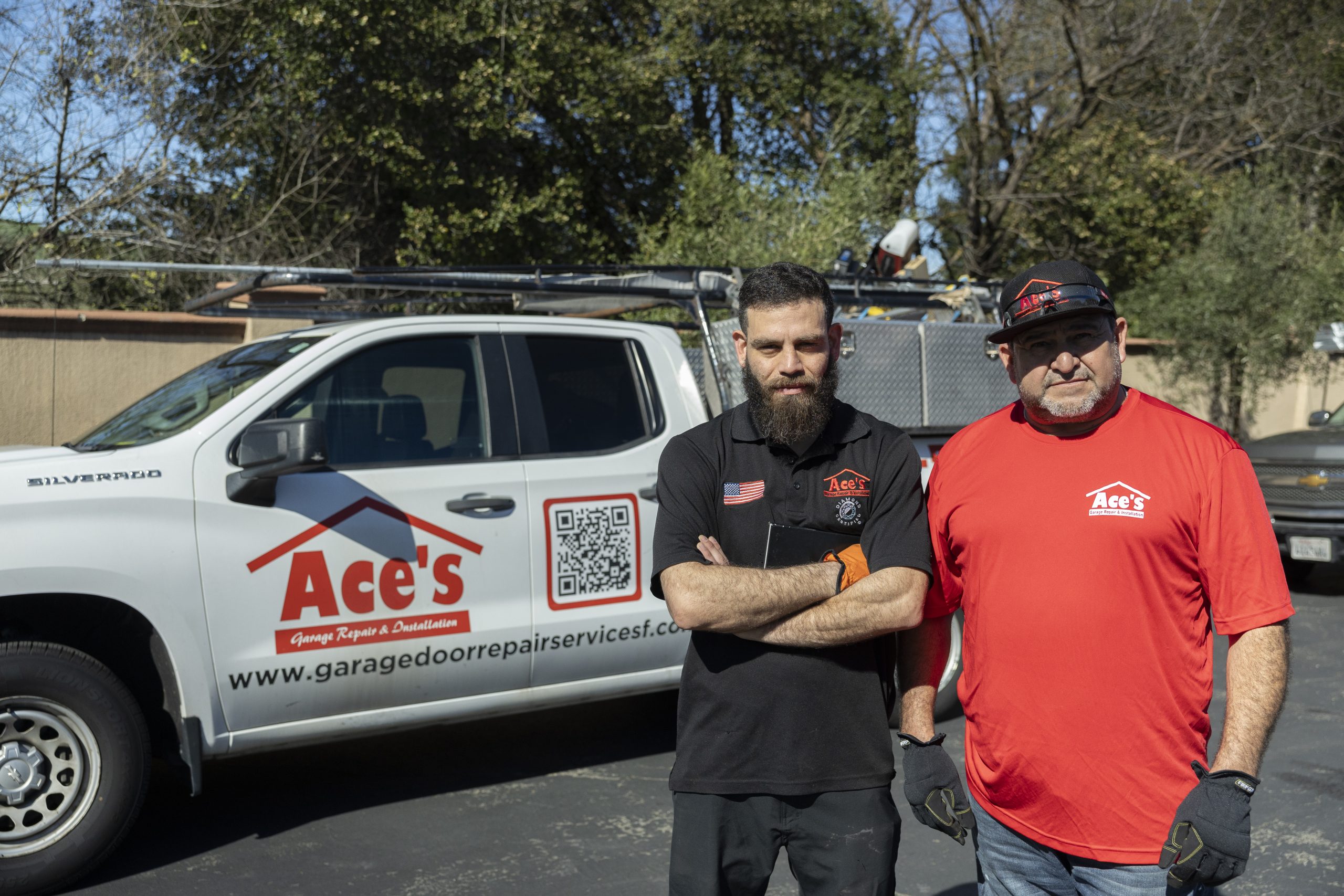
At Ace’s Garage Door Repair & Installation, we take family safety seriously. We have been serving Dublin and Tri-Valley families since 2009. We are Diamond Certified, BBB A+ rated, and proud members of the International Door Association.
“Excellent and prompt service! Ace’s came in just in time. Highly recommend.” May C., Dublin, CA
📞 Call us at (925) 330-4751 or schedule your family safety inspection online.
Proudly serving Dublin, Pleasanton, Livermore, Danville, San Ramon, Alamo, Walnut Creek, Concord, Brentwood, Antioch, and the wider Tri-Valley.